

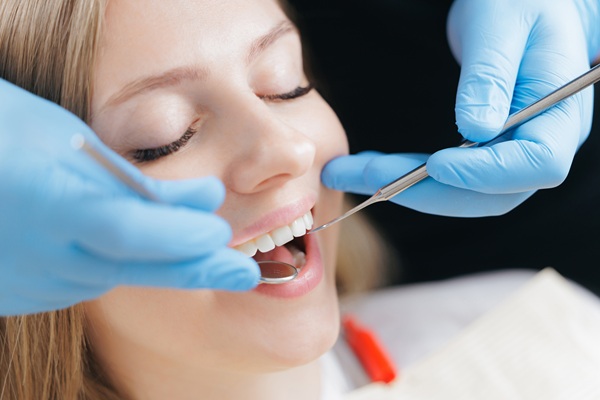
Understanding the importance of an oral cancer screening is necessary, especially for dental patients who smoke, drink alcohol, or spend a lot of time in the sun without using some protection. According to the Mayo Clinic, oral cancer screening aims to identify mouth cancer early, when there is a greater chance for a cure.
What happens during a cancer screening
Learning what happens during an oral cancer screening is helpful, as when dental patients know what to expect during this type of screening, they will feel more comfortable while the screening is being performed. A dentist will first look inside of the patient's mouth to check for any abnormalities, including lingering mouth sores or red and white patches. The dentist will then feel the inside of the mouth to find out if there are any lumps or any other suspicious areas in the mouth. Examining the lips, throat, and neck is the last part of an oral cancer screening.
It is customary for dental patients to have oral cancer screenings
Oral cancer screenings are performed on dental patients every time they undergo an examination. This type of screening is fairly common, as it is easier to treat when oral cancer is found in its earliest stages. In addition, dentists tend to ask the patient questions during the screening, which allows them to better understand their health habits, making it essential for patients to be completely honest as this information helps the dentist know what to look for.
Some patients who are considered to be at high risk will need to undergo additional screenings. One example is using a screening dye, which shows abnormal cells in the mouth by making them appear blue. Another example is using a screening light, which makes any abnormal tissues appear white.
The stages of oral cancer
There are four stages of oral cancer. Depending on the stage someone is in will determine the type of treatment they will need to undergo.
The first stage means the cancer is 2 centimeters or smaller and that it has not spread to the patient's lymph nodes. The second stage means the cancer is between 2 and 4 centimeters and has not yet spread to the lymph nodes. The third stage means the cancer is now bigger than 4 centimeters and still has not spread to the lymph nodes. The fourth and final stage of oral cancer means the cancer can be any size and it has spread to the lymph nodes or anywhere else in the body.
Oral cancer screenings
Now that the above oral cancer screening information is understood, it is important to maintain regular oral cancer screenings. The entire screening process does not take long to perform and does not cause any discomfort or pain. For those overdue for an oral cancer screening, make an appointment with a general dentist. The sooner cancer is found, the better the chances of successful treatment are.
Request an appointment here: https://www.hassandentistry.com or call Dr. Mohammed H. Hassan, DMD at (334) 575-3235 for an appointment in our Dothan office.
Check out what others are saying about our dental services on Yelp: Oral Cancer Screening in Dothan, AL.
Related Posts
Are Oral Cancer Screenings Necessary?
Oral cancer screenings are recommended to patients who are at a higher risk of the disease. While it is not always necessary, most dentists recommend regular oral cancer screenings to ensure any …
What Happens During an Oral Cancer Screening?
Thinking about getting an oral cancer sceening? Oral cancer screenings are a very important part of general dental care as they ensure the health of patient's oral cavity. They involve a few …
Risk Factors for Oral Cancer
There are certain risk factors for oral cancer that are important to be mindful about. Along with routine oral cancer screenings from your dentist, it is encouraged to check for any early signs of oral …
Who Should be Concerned about Oral Cancer?
In short, anyone can have a form of oral cancer. However, individual lifestyle choices can also significantly impact and increase the risk of oral cancer. When a dentist checks a patient for oral cancer, they …